28 March 2013

Bright blue his jacket is, and his boots are yellow.


“Cease! She cried to the raging powers, and the powers from heaven and the power from earth obeyed her. The storm abated…..The waters are one, Antonio. I looked into her bright, clear eyes and understood her truth. You have been seeing only parts, she finished, and not looking beyond into the great cycle that binds us all.”
                      Bless me, Ultima, Rudolpho Anaya, page 126

Ultima is a woman who does not fear evil. She sees the world from a higher vantage point that gives her a broader vision. Thus she can see clearly that being a Márez is not better than being a Luna. From her view point the only two sides are good and evil, and she chooses to good, staying out of trivial rivalries.

Tom Bomadil
One of my favorite characters from The Lord of the Rings is Tom Bombadil. He is an interesting character and unlike any other that appears in Middle Earth. He lives a secluded life living deep in a forest with his wife, Goldberry, the “Daughter of the River,” and seems to be the only one the One Ring does not affect.

Though they have their differences Ultima and Tom Bombadil are similar. Both Ultima and Tom Bombadil live apart from others. They both collect plants, and have a special connection with the earth and seem to draw some of their power and identity from it. They are not the most powerful beings on earth, but both seem to possess power and wisdom that no one else does. Their powers are mysterious, but they both use them for good. Tom Bombadil and Ultima use their powers for good to exorcise evil. Ultima exorcises the evil from Antonio’s uncle Lucas after he was cursed by the Tremontina witches. Tom Bombadil performed something of a reverse exorcism, he ordered the evil Old Man Willow to expel the hobbits after he lulled them to sleep and swallowed them up in his trunk.  Evil does not affect them like it affects others. It does not have much, if any, power over them. Because of their broader vision of the world they do not fear. It is their understanding of good and evil and their ability to see the bigger picture that gives them their power.


20 March 2013

A Blood Sacrifice


“Not for nothing had the those mighty towers arisen, on the mighty bellowing of the bulls, bleeding, their testicles toward the sun, at the hands of the builders well aware of the deep significance of the sacrifice even though they had told the ignorant that this represented an advance in technique of military engineering.”
                The Kingdom of this World, Alejo Carpentier, translated by Harriet de Onís, page 75

Citadelle Laferrière built by Henri Christophe
                At this time in Kingdom of this World, “King” Henri Christophe, a former slave cook who appointed himself king after the Haitian Revolution, is building a massive fortified castle using the forced labor of other former slaves. Every day in the parade square of the fortress while it was under construction several bulls had their throats cut and their blood was added to the mortar being used to supposedly make the structure stronger. This daily act was actually more of a ritual sacrifice than an architectural engineering technique. Clearly this was an act of religious sacrifice.

                In the Bible sacrifice is a common occurrence. The offering of sacrifices was an integral part of the Mosaic Law. The Bible Dictionary describes the purposes of sacrifice and their religious significance.  When Adam and Eve were expelled from the Garden of Eden God gave them the law of sacrifice, which would be a type and representation of the sacrifice and shedding of the blood of Jesus Christ, the Only Begotten.  There were three kinds of altar sacrifices: sin offerings, burnt, offerings, and peace offerings. Young bulls were the sacrificial animals for sin offerings

                Jews sacrificed Bulls to receive a remission of their sins, a symbol of humility and repentance. The Haitians in the book are sacrificing bulls to raise up a prideful impenetrable structure.  Like the people who built the Tower of Babel, they were building a structure to try and elevate themselves-specifically, King Henri Cristophe, who was proud and arrogant in the wake of the defeat of the French- to the level of God.

13 March 2013

Beat of Drums


This past Tuesday was probably one of my favorite class periods of all time. We listened to music. We slapped out beats. Dr. Mack taught us the African roots of Latin America music and we learned what makes samba samba, salsa salsa, and reggaeton reggaeton. It’s the beat.

The basic beat of different types of music  aren’t beat out robotically in the background of the piece, as Dr. Mack mentioned in class, rather,  the melody  falls in and around the beat. The melody and the beat complement each other to create a unique and distinctive blend of sounds. Drums or other such percussion instruments are usually the musical instruments that carry the beat-they set the tone and rhythm for the music. While the melody is catchy and nice to listen to, it is the rhythm that compels your body to move. To rock and sway in time with the pulsing of the rhythm— dancing.  As rhythm is often carried out by the percussion, drumming plays a huge role in setting music genres apart.


As I thought about Latin American music, my thoughts broadened and encompassed more land and people. Virtually every culture and people has their own distinct form of music, made unique by the instruments used to make the music and possibly more importantly, what its basic underlying beat is.


For whatever reason, a phrase in  Kesha’s Die Young keeps running through my head- “I hear your heart beat to the beat of my drums.” As we immerse ourselves in the music, ‘turn our brains off, and just feel it,’ as Dr.Mack advised, we are able to connect which that culture. The beat of the underlying rhythm, sometimes subtle, while at other times unmistakable, beats to the rhythm of their hearts.  And as we open our minds and our hearts to them to appreciate their music, we become one with them. For a time, our hearts beat in unison. They beat as one. 


06 March 2013

He who is without sin


“Maria Candelaria will bring you bad luck. You’ll be very unhappy. Because she’s not a good woman. She’ll be like her mother. Just remember who her mother was.”
                Maria Candelaria, 15:58-16:09, directed by Emilio Fernández, 1944


Maria Candelaria is a Mexican indigenous woman who lived in the town of Xochimilco. She was greatly disliked by the townspeople. They condemned her because her mother was a prostitute and ostracized her. 

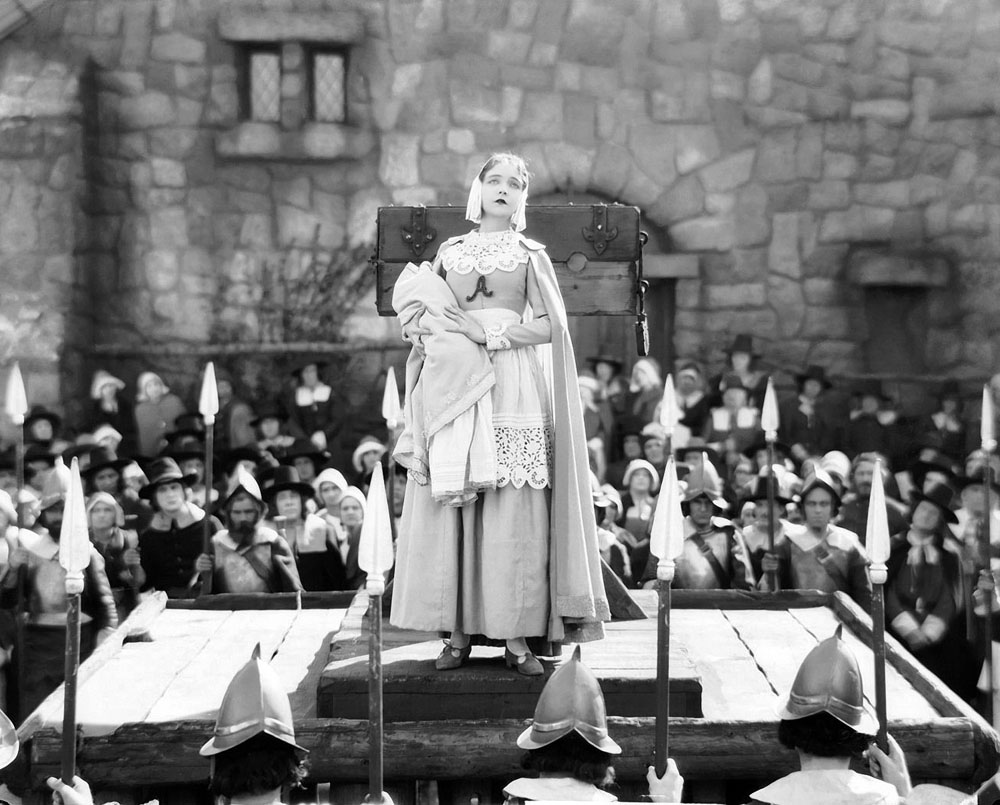
As I was thinking about this movie I couldn’t help but also think of Nathaniel Hawthorne’s Scarlet Letter. Sin, who is to blame for a sin, and who has the authority to judge are themes in both stories. Heste Pryne is condemned because she conceives a child from an adulterous affair and was treated with contempt and spite by the townspeople. Maria is condemned because she was the product of an adulterous affair. Both protagonists are beautiful and gentle women who are accused of sin and excluded from society.

What is interesting is that in Maria Candelaria the people are Catholic, and in The Scarlet Letter they are Puritan, both devout Christian religions, but the townspeople are not very Christ-like. In both it is not the accused sinner who is in need of forgiveness and redemption, but those who profess to be followers of Christ—the townspeople. In the case of the woman taken in adultery Jesus pronounced, “He who is without sin among you, let him first cast a stone at her.” Christ made it clear no one is sinless, but this message was lost on the townspeople of Xochimilco who actually end up killing Maria by stoning her, making them prime candidates for redemption. In The Scarlet Letter the townspeople and Hester’s estranged husband Chillingsworth were twisted by hate and revenge. Hester informed Chillingsworth that in order to save his soul he needed to give up his desire for vengeance.