17 April 2013

And the Favorite Is.....


My favorite book that we read this semester was Inés of My Soul, by Isabel Allende. I don’t think that this one will be the favorite of very many people in the class- it didn’t really come up a whole lot during our class discussions later on in the semester- but I really enjoyed it.

I thought the book was written fairly well and was very engaging. I was invested in the story line and in the characters, especially Inés. I admire her as well. She was a strong, spirited woman who was able to overcome huge trials and hardships. She was a lady and a warrior.Though I have not gone through nearly the amount of pain and hardship as Inés did, I felt a strange attachment to her. I was able to relate to her. She was someone who I think I would have enjoyed having conversations with. I probably would have felt wildly inadequate and weak around her, but she probably would have been a role model.

I think I enjoyed the book so much because it took place in a location that is very close to my heart- Chile. My father is Chilean and all of his family still lives in Chile, so the country and its people mean a lot to me. It is always interesting to learn more about important places in ones ancestry. It was enjoyable and interesting to learn the background of people and places that were previously just names to me. I knew Pedro Valdivia played an important part in early history of Chile. I knew the Mapuche were the indigenous people who lived in Chile before the Spaniards arrived and I knew they were (and still are) proud, resilient, and tough people, but I did not know any stories to go along with that knowledge. Now that I know the things I did not know before (sometimes I did not even know what I did not know) I am able to appreciate Chile’s history more than I did before.

10 April 2013

Choose Ye This Day


“Remember who you are! You have a choice! Your father gave you that.”
                Hellboy, directed by Guillermor del Torro, 1:45:42

Hellboy The Wolves of St August.jpgAt this point in the movie Hellboy, influenced by the wicked Rasputin, is about to finish opening a portal which would allow large, evil creatures to come to earth and destroy it. John Meyers, the FBI agent assigned to Hellboy yells this to him which causes Hellboy to pause, reflect on his actions, and choose to destroy the portal.  

Though Hellboy, who being from Hell, was ‘destined’ to be the key to open the portal for evil to enter, he was able to rewrite his destiny by CHOOSING to be on the side of good. This choice was influenced by his upbringing. Those who raise us have a profound influence on our character and future, but ultimately the power to resist evil and to do good lies within us. Hellboy was on the path towards evil but was intercepted by Professor Bruttenholm, who steered him towards good.

After all others do for us to sway us one way or the other, the choice is ultimately ours.  Anakin Skywalker was raised by a hardworking and good mother and had Obi-Wan Kenobi as his mentor, but the choices he made led him to the dark side and become Darth Vader. Luke, the son of Anakin, was also raised by good people. His aunt and uncle taught him to be good, but it could also be said he was predisposed to evil because his father was Darth Vader. In the end Luke decided for himself and chose good.
                                              

No one is inherently good or evil. And neither circumstances nor origin dictate for certain which side we end up on. People may have a disposition or tendency to lean one way or the other due to their circumstances or upbringing but we choose for ourselves which side we will be on. We are in charge of our destiny.

03 April 2013

Are you afraid of the dark?


“I  will tell you as I see it. I think most of the things we call evil are not evil at all; it is just that we don’t understand those things and so we call them evil. And we fear evil only because we do not understand it”
                Bless me, Ultima, Rudolfo Anaya, page 262

                This is the answer Gabriel, Antonio’s father gives him when Antonio asks him why there is evil in the world. Antonio is seeking understanding and does not understand why he does not understand more, especially about good, evil, mercy, justice, and God. In addition to this answer, his father tells him that understanding comes with life, not all at once. It takes time and learning. Ultima also helped Antonio realize how balance and understanding were achieved through patience and calm.

In the movie Batman Begins by Christopher Nolan, Bruce Wayne goes down to The Narrows, to confront Falcone—the city’s crime boss- and declares to Falcone that he is not afraid of him.  These scene interestingly portrays contradictory representations of the relationship between fear and understanding. Falcone calmly tells Bruce that he is not afraid because he does not understand who he (Falcone) is. He later informs Bruce that he is in fact afraid. Because he is from the privileged upper class he does not understand the world The Narrows and Falcone is a part of, he says, “It is a world you will never understand. And you always fear what you don’t understand.”

Fear because of understanding and fear of the unknown are valid fears, though fear of the unknown is the more dangerous of the two. It is more potent and debilitating. But greater strength is gained when this fear is overcome. When Bruce Wayne overcame his fear of the unknown of darkness and bats-the inhabitants of darkness, by embracing and seeking to understand them. When he did so he was capable of more than he was previously. Similarly, when Antonio faced the unknown and came to be at peace with it, he was much more balanced, sure of himself, and at peace.

28 March 2013

Bright blue his jacket is, and his boots are yellow.


“Cease! She cried to the raging powers, and the powers from heaven and the power from earth obeyed her. The storm abated…..The waters are one, Antonio. I looked into her bright, clear eyes and understood her truth. You have been seeing only parts, she finished, and not looking beyond into the great cycle that binds us all.”
                      Bless me, Ultima, Rudolpho Anaya, page 126

Ultima is a woman who does not fear evil. She sees the world from a higher vantage point that gives her a broader vision. Thus she can see clearly that being a Márez is not better than being a Luna. From her view point the only two sides are good and evil, and she chooses to good, staying out of trivial rivalries.

Tom Bomadil
One of my favorite characters from The Lord of the Rings is Tom Bombadil. He is an interesting character and unlike any other that appears in Middle Earth. He lives a secluded life living deep in a forest with his wife, Goldberry, the “Daughter of the River,” and seems to be the only one the One Ring does not affect.

Though they have their differences Ultima and Tom Bombadil are similar. Both Ultima and Tom Bombadil live apart from others. They both collect plants, and have a special connection with the earth and seem to draw some of their power and identity from it. They are not the most powerful beings on earth, but both seem to possess power and wisdom that no one else does. Their powers are mysterious, but they both use them for good. Tom Bombadil and Ultima use their powers for good to exorcise evil. Ultima exorcises the evil from Antonio’s uncle Lucas after he was cursed by the Tremontina witches. Tom Bombadil performed something of a reverse exorcism, he ordered the evil Old Man Willow to expel the hobbits after he lulled them to sleep and swallowed them up in his trunk.  Evil does not affect them like it affects others. It does not have much, if any, power over them. Because of their broader vision of the world they do not fear. It is their understanding of good and evil and their ability to see the bigger picture that gives them their power.


20 March 2013

A Blood Sacrifice


“Not for nothing had the those mighty towers arisen, on the mighty bellowing of the bulls, bleeding, their testicles toward the sun, at the hands of the builders well aware of the deep significance of the sacrifice even though they had told the ignorant that this represented an advance in technique of military engineering.”
                The Kingdom of this World, Alejo Carpentier, translated by Harriet de Onís, page 75

Citadelle Laferrière built by Henri Christophe
                At this time in Kingdom of this World, “King” Henri Christophe, a former slave cook who appointed himself king after the Haitian Revolution, is building a massive fortified castle using the forced labor of other former slaves. Every day in the parade square of the fortress while it was under construction several bulls had their throats cut and their blood was added to the mortar being used to supposedly make the structure stronger. This daily act was actually more of a ritual sacrifice than an architectural engineering technique. Clearly this was an act of religious sacrifice.

                In the Bible sacrifice is a common occurrence. The offering of sacrifices was an integral part of the Mosaic Law. The Bible Dictionary describes the purposes of sacrifice and their religious significance.  When Adam and Eve were expelled from the Garden of Eden God gave them the law of sacrifice, which would be a type and representation of the sacrifice and shedding of the blood of Jesus Christ, the Only Begotten.  There were three kinds of altar sacrifices: sin offerings, burnt, offerings, and peace offerings. Young bulls were the sacrificial animals for sin offerings

                Jews sacrificed Bulls to receive a remission of their sins, a symbol of humility and repentance. The Haitians in the book are sacrificing bulls to raise up a prideful impenetrable structure.  Like the people who built the Tower of Babel, they were building a structure to try and elevate themselves-specifically, King Henri Cristophe, who was proud and arrogant in the wake of the defeat of the French- to the level of God.

13 March 2013

Beat of Drums


This past Tuesday was probably one of my favorite class periods of all time. We listened to music. We slapped out beats. Dr. Mack taught us the African roots of Latin America music and we learned what makes samba samba, salsa salsa, and reggaeton reggaeton. It’s the beat.

The basic beat of different types of music  aren’t beat out robotically in the background of the piece, as Dr. Mack mentioned in class, rather,  the melody  falls in and around the beat. The melody and the beat complement each other to create a unique and distinctive blend of sounds. Drums or other such percussion instruments are usually the musical instruments that carry the beat-they set the tone and rhythm for the music. While the melody is catchy and nice to listen to, it is the rhythm that compels your body to move. To rock and sway in time with the pulsing of the rhythm— dancing.  As rhythm is often carried out by the percussion, drumming plays a huge role in setting music genres apart.


As I thought about Latin American music, my thoughts broadened and encompassed more land and people. Virtually every culture and people has their own distinct form of music, made unique by the instruments used to make the music and possibly more importantly, what its basic underlying beat is.


For whatever reason, a phrase in  Kesha’s Die Young keeps running through my head- “I hear your heart beat to the beat of my drums.” As we immerse ourselves in the music, ‘turn our brains off, and just feel it,’ as Dr.Mack advised, we are able to connect which that culture. The beat of the underlying rhythm, sometimes subtle, while at other times unmistakable, beats to the rhythm of their hearts.  And as we open our minds and our hearts to them to appreciate their music, we become one with them. For a time, our hearts beat in unison. They beat as one. 


06 March 2013

He who is without sin


“Maria Candelaria will bring you bad luck. You’ll be very unhappy. Because she’s not a good woman. She’ll be like her mother. Just remember who her mother was.”
                Maria Candelaria, 15:58-16:09, directed by Emilio Fernández, 1944


Maria Candelaria is a Mexican indigenous woman who lived in the town of Xochimilco. She was greatly disliked by the townspeople. They condemned her because her mother was a prostitute and ostracized her. 

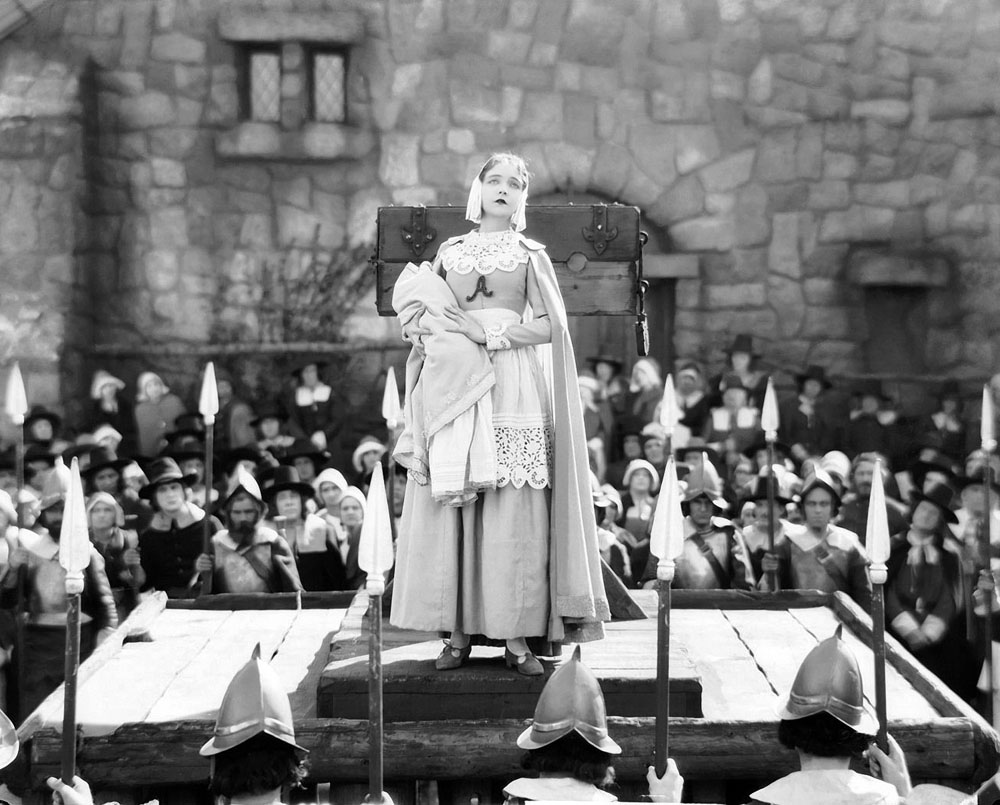
As I was thinking about this movie I couldn’t help but also think of Nathaniel Hawthorne’s Scarlet Letter. Sin, who is to blame for a sin, and who has the authority to judge are themes in both stories. Heste Pryne is condemned because she conceives a child from an adulterous affair and was treated with contempt and spite by the townspeople. Maria is condemned because she was the product of an adulterous affair. Both protagonists are beautiful and gentle women who are accused of sin and excluded from society.

What is interesting is that in Maria Candelaria the people are Catholic, and in The Scarlet Letter they are Puritan, both devout Christian religions, but the townspeople are not very Christ-like. In both it is not the accused sinner who is in need of forgiveness and redemption, but those who profess to be followers of Christ—the townspeople. In the case of the woman taken in adultery Jesus pronounced, “He who is without sin among you, let him first cast a stone at her.” Christ made it clear no one is sinless, but this message was lost on the townspeople of Xochimilco who actually end up killing Maria by stoning her, making them prime candidates for redemption. In The Scarlet Letter the townspeople and Hester’s estranged husband Chillingsworth were twisted by hate and revenge. Hester informed Chillingsworth that in order to save his soul he needed to give up his desire for vengeance. 

27 February 2013

¿Quienes somos?


The History of  Mexico: From the Conquest to the Future, Diego Rivera, 1929-1930

Mexico’s most popular and well known artist is Diego Rivera. He is famous because he helped Mexicans realize their identity. Rivera was a champion in the cause of Mexican Nationalism a movement which developed in wake of a long period of significant amounts of foreign intervention and meddling in Mexican affairs.  The Mexican government Rivera was commissioned by to paint murals depicting traditional Mexican culture to help create a sense of national identity. Many of his murals celebrated Mexican history instead of sweeping it under the rug and pretending it didn’t exist. Rivera’s mural History of Mexico is a non-idealized portrayal of the history of Mexico from the conquest on forward. This and other murals taught Mexicans to be proud of their indigenous and Mestizo heritage.

To Ace Out A Homeboy, Manuel Cruz, 1974

Manuel Cruz is a modern day Chicano artist who also paints murals with indigenous Mexican themes, though these are usually on the outsides of buildings. His mural To Ace Out A Homeboy,  like the murals of Rivera, is also a cry for Mexicans and Chicanos to remember their roots . It depicts a larger- than- life Aztec warrior holding the body of a young Chicano who was shot and killed by two gang member driving away in a car. The Warrior is looking sadly and intently at the viewer as if to say “When will this end? When will brother stop killing brother? When will Mexico’s descendants remember their noble past and take pride in it?”

The works of Rivera and Cruz both share a common message, and that message is identity. These two murals are important because they demonstrate the capability of art in the creation of identity. It can give people something to believe in. You can’t really have a firm understanding of who you are and what possibilities lie in your future unless you know where you came from. 

20 February 2013


“Today the orchestra means for world, the only way that music can touch human souls, and change the individual. To transform all those feelings and our future, it is possible through music. Which art could do it better. That is what the orchestra means to our country…salvation and transformation”
Tocar y Luchar, directed by Alberto Alvero, 48:52-49:20


                Edicson Ruíz, the man who said this used to play the viola but switched to the cello. Music saved Edicson's life. From the humblest of Venezuelan roots, a country chock full of problem, he was able to rise above his circumstance and land the seat of the youngest member of the Berlin Philharmonic. Bringing honor, pride, and hope to himself but also to the people of his home city. He is living proof of the saving and transformative power of music.

In the 1999 movie based on a true story, Music of the Heart, Meryl Streep plays the role of Roberta Guaspari, a violin teacher who moves from a quiet middle class neighborhood to the middle of Harlem in the wake of her recent divorce. She gets a job teaching inner city elementary school children to play the violin, a frustrating task that was mentally, emotionally, and labor intensive. She faces many obstacles including racism, poverty, and ignorance, but was able to overcome them all and change the lives of her students. Ultimately she saved the futures of many of them. They broke free of social norms and expectations for inner city children and were able to fulfill their potentials and pursue the life their parents could only dream of for them.

Music speaks a language that everyone in the world can understand, regardless of social status, race, or income level. It can accomplish things that money, violence, or handouts would be hard pressed to accomplish. Music has the power to change the course of people’s lives; and as their lives are changed, the course of history is changed.


                                                       Trailer to Music of the Heart


13 February 2013

Going the Distance


“Martim went out to hunt with Poty. He then separated himself from [Iracema] in order to have the pleasure of returning to her.”
          Iracema, José de Alencar, page 79


Martim and Iracema were in love. The days of their early marriage were bliss and they loved being with each other. Martim would leave home to hunt so he would be extra happy to see her when he returned. But after one long trip away later on, he almost dreaded returning to her.
This passage reminded me of the old adage, “Distance makes the heart grow fonder.” There are differing opinions as to the validity of this statement. Some agree, others are more inclined to think saying “Out of sight, out of mind” is truer.

I think both sayings are true. To a certain extent.

Despite the oath I swore to myself that I would never be in a long distance relationship I find myself...in a long distance relationship. It is not for everyone and it is definitely not for every relationship; I do it because he is worth it. But the 600 miles between us forces us to communicate and build a relationship not centered on the physical.

Scriptures say, if "[we] never had known the bitter [we] could not know the sweet" (D&C 29:39), and that we must "taste the bitter...to know the good" (Moses 6:55). Being apart from loved ones is definitely bitter. But I believe distance can draw a couple together if their relationship is a secure, meaningful one; and if their separation is not inordinately long. However, if their relationship is based on infatuation-which does not last-instead of a solid foundation of friendship and trust, distance can definitely destroy it.

Martim and Iracema's relationship did not last through their prolonged separation because it was immature and built on the shaky foundation of infatuation. It was purely physical. They declared their love for each other the minute they saw each other. In the end, Iracema was pathetically enamored with Martim, and he was selfish not 100% committed ; Evident by his longing to be elsewhere and the fact that he did not hurry back when he knew Iracema had given birth. What should have been sweet, resulted to be bitter.


06 February 2013

Lets Get Real


The Valley of Mexico, José María Valesco, 1875


To me, the brilliance of the Mexican painter José María Valesco, was partly due to his independence. He was able to think on his own and through his paintings convey his thoughts and feelings, which were different from the modern artistic trend. At the time most landscapes were romanticized and made to look more perfect than they actually were. Valesco did not buy into the idealization of art; he felt that the true beauty and character of Mexico lay in reality. 

                             
This take on the portrayal of reality reminds me of Dove’s Campaign for Real Beauty. For years movie and television screens and print media have shown tan, skinny women with impeccable skin and hair to be not only the ideal but the norm.  The purpose of Dove’s campaign is to fight against how the media portrays women. Through commercials, short videos, magazine and billboard advertisements Dove rejects the idealized illusion of beauty. Dove counters the distortion of reality by revealing the insane process of procuring these ‘ideal women’ and by displaying and celebrating women of all shapes, sizes, and colors.


Like Valesco, Dove is not in the business of making things seem like something they are not, rather they show the world reality and urges it to accept reality and prize it, because it is real, tangible, and ready to be experienced. It can be found in your backyard or just outside of the city, not just on canvas or in a magazine. Dove and Valesco’s intent isn’t to discourage anyone with the ordinary-ness of the world, but rather to rejoice in the natural beauty of the world, to be content with what is available and not long for something impossible. Valesco was trying to say that Mexico didn’t need changing. It it was different it wouldn’t be mexico. Dove declares that all women are beautiful, and that flaws and imperfections add to the beauty of a woman.


30 January 2013

We Are All Enlisted


To quote Colonel Scott Krawczyk, your course director:
‘From the very earliest days of this country, the model for our officers, which was built on the model of the citizenry and reflective of democratic ideals, was to be different. They were to be possessed of a democratic spirit marked by independent judgment, the freedom to measure action and to express disagreement, and the crucial responsibility never to tolerate tyranny.’
-William Deresiewicz, “Solitude and Leadership”


In his talk Deresiewicz talked about what makes a good leader. He states that the technology of today is stunting the intellectual processes of young people, that we are in need of more leaders who believe in something and stand by what they believe.

This week in my ROTC class we studied the Rules of Engagement and Law of Land Warfare. It a nutshell, these two things tell you what you can and can’t do as a combatant in military operations. What made me proud was how in line they are with what we as LDS believe to morally and ethically right. In our text book was this quote by General John Wickham Jr:

“In times of danger, it is the ethical element of leadership
which will bond our units together and enable them to
withstand the stresses of combat.”
 (From DA PAM 600-65, Leadership Statements and Quotes) *emphasis added


In class we discussed Deresiewicz’s talk and had a very stimulating discussion about leadership that I enjoyed. However I left a bit troubled.
                                                                                                                 
As we discussed leaders and what leadership means, there seemed to me a subtle, unintentional, perhaps subconscious view that military leaders are not the leaders to look to when it comes to morality and ethics. This bugged me. I’m not angry or trying to call anyone out, I am just disappointed. Disappointed someone could think of military leaders and not equate then with moral or ethical uprightness.

Think of Captain Moroni, Helaman, and Teancum. Of the current First Presidency and Twelve Apostles ten have served in the military

The mere inference that military leaders are not as moral as other leaders could not be further than the truth.

What about George Washington? Dick Winters? Hal Moore?


Deresiewicz’s talk, which urged the discovery adherence to one’s core values was directed at cadets at the United States Military Academy. Future officers in the United States Army.


Every military leader may not have an outstanding moral compass, but neither do all CEO’s or sports stars. We should look to follow the example of ALL moral and ethical leaders, regardless of who they lead, but remembering that we are all soldiers. Soldiers in God’s Army, fighting a battle that can only be won by staying true to our morals.


         Pres. Uchtdorf                                                                                Pres. Monson                                                                                               Pres. Packer
                                             

23 January 2013

A Recipe for Acceptance

Thanks to [Felipe] I became the only huinca able to understand the Mapuche, but it would take nearly a year. I just wrote, ‘understand the Mapuche,’ but that is a fantasy. We will never understand one another; there is too much accumulated resentment between us.”
                Inés of my Soul by Isabel Allende, page 181
           
File:Mauricio rugendas - el malon.jpg
                   
The Spanish vs. the Mapuche. What a perfect storm it was when the two met. Both proud, hard headed, and spirited. But it was the Spaniards’ arrogance that about did them in. They treated the Indians horrendously and were duplicitous. They made no honest effort to reach an agreement with the Mapuche and figuratively but also quite literally burned bridges between them, making it impossible for them ever understand each other.                         
I am in the army reserves and contracted in BYU’s army ROTC program and every so often guest speakers come and talk to us about their experiences in the military, the world, and life in general. Last semester retired Major General Loeffke (pronounced ‘love-key’) visited. This man has an amazing resume. Among his many admirable achievements is the fact that he speaks five languages- English, Spanish, Portuguese, Russian, and Cantonese. He imparted upon us some wisdom he has learned from the years he spent interacting with other cultures.
Maj. General Loeffke leads us in a repetition of "I'm proud to be an American"
How to be Acceptable in Any Society- according to Major General Loeffke: 
1-Be a healer. Learn basic healing techniques.
2- Sing. You don’t have to sing well. Sing songs from your culture, then learn songs from theirs.
3-Entertain. Magic tricks, origami, jokes, etc

Inés doesn’t say that the Spanish and the Mapuche  will never understand each other because it is fundamentally impossible. They never will because of all the ‘accumulated resentment.’  Resentment spawning from the Spanish having no DESIRE to understand the Mapuche. I believe Gerneal Loeffke would be disguted with most Spaniard but approving of Inés. She befriended  Catalina and they learned healing arts from eachother. She made an effort to learn the Mapuche language, which General Loeffke would say is vital to understanding the culture.
It seems that to understand another culture one must have a desire to do so. It does not mean that you have to abandon your own culture, you just need to stretch your mind and heart to fit around theirs. 


16 January 2013

¿Donde estan?-- Where are they?


“Don Benito told us stories of Diego de Almagro’s disastrous journey. He said that the adelantado had allowed his men to commit atrocities [while crossing the desert] that were not worthy of a Christian. They took thousands and thousands of Indians from Cuzco with chains and ropes around their necks to keep them from escaping. When one of them died, they simply cut off his head to save themselves the work of undoing the string of captives or holding up the endless line dragging across the sierra.”
Inés of My Soul by Isabel Allende, page 110.

[http://www.thenakedscientists.com/]
This desert located in northern Chile is the driest place on earth, and has probably held this title for thousands of years. While the average rainfall is 4 millimeters per year there are some places that have no recorded rainfall.  It spans 600 miles and covers over 40,000 square miles. The scarce vegetation found clinging to life in the Atacama is kept alive by the moisture of the garúa fog that creeps inland from the sea in some areas. Barely inhabitable by even lichens, algae, and cacti, the Atacama is no place for humans or animals.  This desert with its relentless heat, bone-chilling nights, its dearth of water and the life which it brings has murdered many who have dared venture into its territory.

As I was mulling over what stood out to me from the first 150 pages of Inés of my Soul, my attention was fixed on the Atacama desert and the abuses of the Indians by the Spaniards and I was reminded of the movie Nostalgia for the Light. It is a powerful and thought provoking documentary released in 2010 which artfully draws connections between the astronomers who peer through their telescopes located in the Atacama desert (which happens to be an ideal place for stargazing due to its rainless nature) searching for clues about the history of earth and the universe, and the women who search under the baking sun for the remains of their “disappeared” loved ones.

Chileans holding pictures of loved ones who disappeared during  Pinochet's Regime.
"Donde estan?" - "Where are they?" They say.
[http://blogs.heraldo.es/gervasiosanchez/?p=276]


While the hellish conditions of the desert alone is enough to kill most forms of life, most of the bones that litter the salted and mineral rich landscape are there due to humans and their devilish tendencies. In this desert setting many Indians were killed by Spaniards during the Conquest and Colonization, both by their hand and by their inhumane treatment. The Spaniards refused to believe that the Indians were human and deserving of respect. They were treated like animals—at times, less than animals— and disposed of like the contents of their chamber pots. The bodies of Indians littered the path ambitious Spaniards dared take through the Atacama.


Crimes against human life in the Atacama Desert were to be repeated centuries later during the regime of Augusto Pinochet. Abandoned mining towns in the desert were turned into prisons for those arrested for “political crimes,” and holes were dug into the parched earth where the bodies of executed “enemies of state” were dumped. Their bodies joining the bones of others who were oppressed and murdered hundreds of years earlier by those who also thought themselves superior and above reproach.
                    

09 January 2013

¡SOY YO!


Me llamo....erika rubilar. And I am me.

Whenever my dad would ask us what we were up to when we were being lazy or zoning out he would say that we were "Contemplando la imortalidad del cangrejo."  And thus the name of this blog was born. Because these posts will likely be musings of mi cerebro. Deep ones.

Esta foto de mi as a baby descibes me pretty well.


I like to climb things like trees and mountains and edificios. And I like to do it a pie pelado.

Estudio 'Latin American Studies'

Mi padre es de Chile asi que un pedazo de my heart belongs to the country and its people.

I love Latin America. I love la cultura. Me encanta Spanish. Especialmente Chilean Spanish. 


And I love when I'm so immersed in it that yo empiezo a pensar en castellano.

Yo soy de Nueva York y Atlanta. 

I like to use mi cuerpo. I like to make it stronger and faster.

I don't like being encerada en un building. I love being outside. A menos que hace frio.

I love mi perro casi more than i love humanos.

Yo soy aventurera. I love to eat comida and travel. An excellent threesome. 

That being said, yo soy un 'food snob'. Y un 'movie snob'. No puedo aguantar comer mala comida o desperdiciar mi tiempo mirarando peliculas estupidas. 

I am in the Army. A veces es muy awesome (yeehaw! blackhawk rides!!) Sometimes no es tan divertido. It's a love-hate relationship.
the tattoos are fake (mine anyways) the remnants of my halloween costume


Me cuesta mucho mirar las noticias and be informed about the happenings of the world because a lot of it makes me enojada. I wish there were soluciones faciles para cosas como gun control, abortion, and illegal immigrants. Pero no hay.


Ojalá que nunca olvido how to have fun. And that I can always be learning.